

Extreme temperatures are forcing Europe to take drastic measures at a time when its economy is already under pressure from US tariffs, Chinese competition, and higher energy prices caused by the war with Iran. Romania’s state-owned nuclear power company Nuclearelectrica began disconnecting its only active reactor from the electrical grid due to historically low water levels in the Danube River, which is critical for cooling equipment, as confirmed by the company to CNN. Romania has declared a state of energy emergency for the entire month of August and has asked businesses and households to voluntarily reduce their energy consumption. Similar problems are faced by France and Hungary, where nuclear power production has been curtailed due to low river levels and high temperatures. At the same time, drought conditions are fueling destructive and highly costly wildfires while lowering agricultural yields, threatening to trigger a new surge in food prices.
Cost of 180 billion euros for the European economy
This summer’s furnace in Europe could cost the economy roughly 180 billion euros, or approximately 1% of GDP, according to an estimate by Dutch-based Triodos Bank. This amount is roughly equal to the entire expected economic growth of the European Union. "Lower labor productivity is likely to have the largest economic impact, alongside disruptions in agriculture, energy, and transport," the bank stated in its report. Large parts of Europe are experiencing their fifth heatwave of the year this week, with regions in Britain, France, Spain, and Italy under extreme heat alert. The new heatwave follows the hottest June and July ever recorded in Western Europe, according to Copernicus, the European climate change monitoring agency. In Paris, extreme temperatures even forced the Eiffel Tower and the Louvre to close early on certain days.
The second blow: A new energy crisis in winter
Although some analysts question whether the heatwave will have a significant impact on Europe's economic growth this year—citing improvements in business confidence in July and GDP growth during the first half—the weather is not the sole threat. Europeans are also facing the prospect of a new spike in energy bills this winter as natural gas prices climb. Benchmark natural gas contracts traded this week near their highest levels since the outbreak of the war with Iran, nearly double compared to the same period in 2025. The war in the Middle East has restricted available natural gas cargoes, making them more expensive and raising the risk of a new energy crisis. Simultaneously, the heatwave has driven up demand for air conditioning, boosting gas consumption precisely when Europe should be filling its storage facilities ahead of winter. "The EU gas market is vulnerable ahead of the peak winter demand," warned Kieran Tompkins, senior climate and commodities economist at Capital Economics. As he noted, gas reserves stand at their lowest levels for this time of year in more than a decade.
Rivers dry up – A blow to industry
The Danube is not the only critical European river drying up due to prolonged drought conditions. In Germany, Europe’s largest economy, historically low levels on the Rhine—a critical commercial artery for transporting industrial goods like steel and chemicals—could shave 0.3 percentage points off German GDP growth this year, according to economists at ING. This represents a major blow to an economy expanding at a rate of less than 1% annually. German chemical giant BASF warned that it might not be able to fulfill orders for certain chemical compounds as the low level of the Rhine River has restricted the supply of key raw materials. The company stated that it is shifting cargo to alternative transport modes, such as trucks and rail, while deploying more vessels specifically designed for navigating shallow waters. Several German federal states temporarily suspended Sunday truck driving bans in an attempt to mitigate the fallout on supply chains.
Europe needs 70 billion euros annually for climate adaptation
The European Commission has warned that member states will need to invest around 70 billion euros per year until 2050 to adapt to climate change. These investments can boost economic activity, but they will simultaneously increase pressure on already strained state budgets. Some businesses have already begun adapting in unusual ways. In England, the family-run Rookery Farm is now harvesting its crops at 3 a.m. to ensure products retain sufficient moisture levels. "Harvesting is no longer just about avoiding rain—we are now adapting to crops that can become overly dry, which means more night harvesting to meet the quality standards demanded by our customers," said farmer Eleanor Gilbert.
Natural gas nightmare – The risk from the Strait of Hormuz
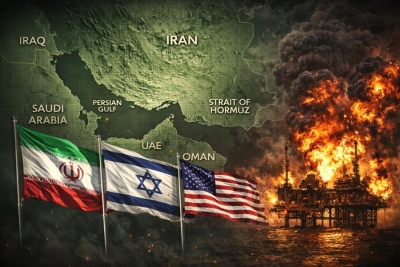
As Europe faces consecutive heatwaves, it simultaneously confronts the threat of a renewed energy crisis during the winter months. EU natural gas reserves stood at 59% on Tuesday, according to data from Gas Infrastructure Europe, a level significantly lower than the average for this time of year and comparable to the summer of 2021, when Russia began curtailing exports to Europe. "I am truly worried," said Anne-Sophie Corbeau, a researcher at Columbia University’s Center on Global Energy Policy, referring to the EU's ability to replenish its depleted gas reserves. As she explained, very few gas cargoes have exited the Strait of Hormuz, and nearly all are heading toward Asian markets. Summer represents the critical period for Europe to fill its gas storage units before the colder winter months, when prices are typically much higher. However, the Strait of Hormuz remains effectively closed, restricting access to roughly one-fifth of global liquefied natural gas (LNG supply) transported via tankers. The remaining cargoes, including those originating from the US, are more likely to head to Asia rather than Europe, as demand there is exceptionally strong and buyers offer higher prices.
"Not a 2022-style crisis" – but prices cause alarm
However, according to Christoph Halser, senior gas and LNG analyst at Rystad Energy, the current situation is "not a 2022-style crisis," referring to the historical price spikes in Europe following the Russian invasion of Ukraine. Since then, Europe has drastically reduced imports of Russian natural gas—most of which arrived via pipelines—as well as its overall energy consumption. "Natural gas demand in Europe today is about 20% lower than in 2021," stated Christoph Halser. In the same vein, Massimo Di Odoardo, vice president for gas and LNG research at Wood Mackenzie, estimates that Europe will avoid an extreme scenario of energy shortages and rolling blackouts. The risk of physical shortages is, according to him, "overstated," as Europe possesses the financial means to "buy its way out" of such a crisis. Nevertheless, the core issue remains: prices stand at alarmingly elevated levels.
European natural gas at 61 euros/MWh
The price of the benchmark European natural gas contract settled at 61 euros per megawatt-hour on Wednesday, according to data from the Intercontinental Exchange, compared to just 32 euros/MWh on the same day in 2025. The major question now centers on the upcoming winter. "Europe should really worry about a scenario in which the Strait of Hormuz does not reopen, as that could certainly push prices to extremely high levels," warned Massimo Di Odoardo. Heatwaves, drought, transport disruptions, low productivity, pricier food, and a new energy headache now compose an explosive mix for the European economy, while the fallout from the war in the Middle East continues to transmit through markets and energy costs.
www.bankingnews.gr

Σχόλια αναγνωστών